AI in service of the art, not the other way around.

Creative AI for Music Artwork

For musicians, artists and labels who want to master generative tools without losing their own identity along the way.

Why write about creative AI for music artwork?

Generative tools don't replace artistic vision. They speed it up, if you know how to steer them. Between a generic result produced in thirty seconds and an artwork that holds together, that people recognize, that sits inside a precise art direction, the difference isn't in the tool. It's in the hand holding it.

These pages come from a practitioner, not a commentator. Léopold Dumont uses these tools every day on commercial work: album covers, logos, label identities. What's written here is a method tested on real jobs. Not a demo.

Perspectives, artwork by Takuya Studio, 2024
Perspectives, 2024.

The IA Bulletin (in French) is the public trace of that ongoing watch: one entry a day on how generative models are changing, written from a clear position, without naive enthusiasm or reflex rejection. Following the ecosystem closely is a precondition for using it with any judgment.

What these pages cover

01

Midjourney for music visuals

Advanced prompting, aesthetic consistency from one image to the next, workflows built for album cover and logo design. How to build a personal style you can reproduce, one that depends on neither a trend nor a preset.

02

AI and record label visual identity

How to build a consistent visual world across several releases using generative tools. Keeping visual continuity, making each release speak to the last, building an identity that lasts.

03

Keeping up with new tools

The ecosystem moves fast. Here is a method to track the releases that matter, assess a new tool quickly and decide whether it belongs in an existing workflow, without chasing every announcement.
Who it's for

01

Self-releasing musician

You handle your visual communication alone: covers, social media visuals, release identity. You want images that live up to your music, without hiring a designer for every release.

02

Independent label

You put out several projects a year on tight budgets and tighter deadlines. Generative tools can speed up your artwork production, provided you master them well enough to keep your editorial line consistent.

03

Graphic designer

You already work in visual design and want to bring AI into your workflow without it showing, or without it replacing what clients actually pay you for. These pages cover a discreet, controlled use of these tools inside an existing professional practice.

Léopold Dumont

Founder of Takuya Studio · Graphic designer & musician · Paris

Léopold Dumont founded Takuya Studio in 2016 with two roots: graphic design for music, and music production. The studio works with independent artists and labels on their album covers, visual identities and websites.

He has been using generative AI tools in his commercial work since 2022, from a position set out in the manifesto for responsible design. In 2026 he launched the IA Bulletin, a daily watch on how creative AI is changing. He also founded the label Asymetric Sounds, which gives him a place to test AI in real conditions, in music production as well as visuals.

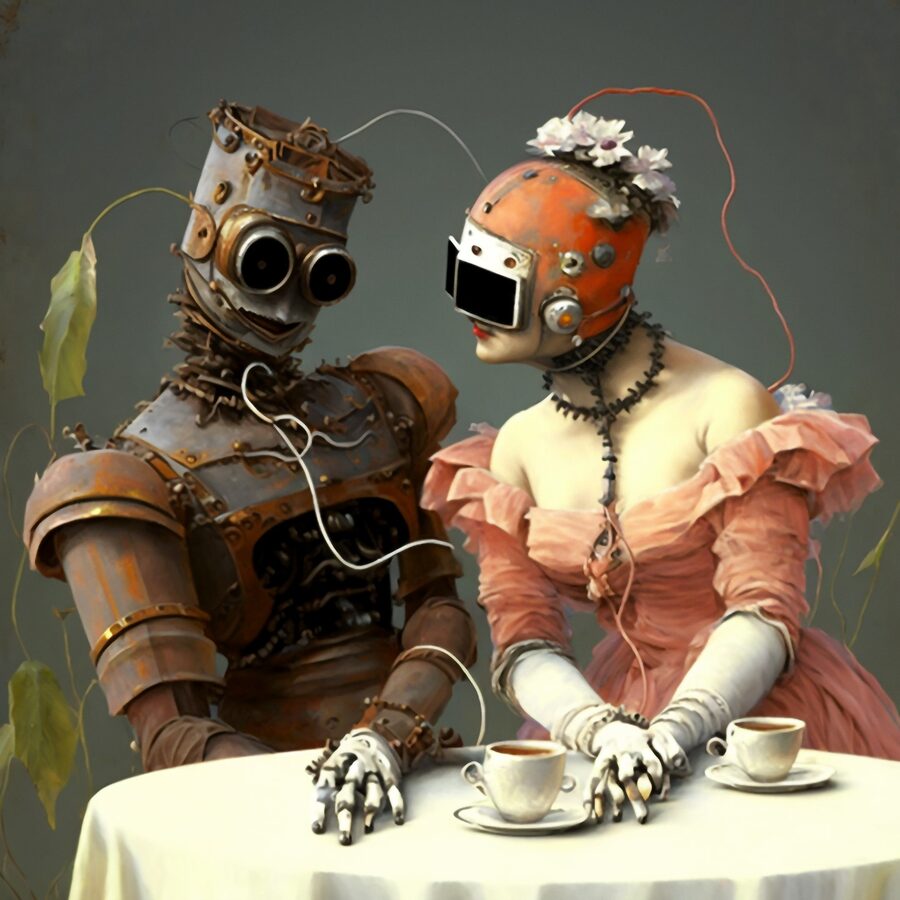
Music Conversation, artwork by Takuya Studio, 2024
Music Conversation, 2024.

All pages on creative AI

The in-depth pages, each one covering a side of generative AI in visual and music creation: theory, applied practice, legal framework, case studies.

Theory & stance

Applied practice

Legal & ethical framework

Case studies & self-assessment

Frequently asked questions

  • No, but it changes how they work. Comparing a fully manual workflow with an AI-assisted one shows that most of the time saved comes in the exploratory phase: more directions tried, shorter back-and-forth, more proposals on the table. Artistic judgment, visual direction and retouching stay entirely with the creative. They get used more, not less.

  • Yes. The Neurobossa case study follows an album cover from start to finish: the initial visual brief, the prompts used at each step, the points where manual retouching took over, and the final result delivered in four hours. A real project, not a theoretical demo.

  • With how a prompt is built. The top 50 Midjourney prompts for album cover design gives you a base organized by category (print styles, photographic lighting, references by music genre, textures) with the technical parameters explained. Then comes the real work: understanding the logic well enough to build your own prompts, rather than copy-pasting someone else's.

  • It's a question plenty of people avoid asking plainly. Our overview of AI copyright in 2026 sets out what is established: who owns the outputs depending on the tool, the status of training data, the clauses contracts should include. A framework worth knowing before AI goes into a commercial pipeline. Not to hide behind it, but to work in a way you can document and defend.

  • The 8-question diagnostic quiz looks at the tools you already use, the time you spend on visual research, your technical blocks and your visual culture, then gives you a profile and a place to start. It doesn't measure skill in absolute terms. It finds the right way in: discovery, improvement or advanced optimization.